For what it's worth, my feeling at the moment is that the Dark Tower itself was not originally part of the story of Childe Roland. Jacobs seems to have introduced the Dark Tower into his more famous version almost solely on the questionable evidence of Shakespeare, and it is wholly absent from Robert Jamieson's older version, of which its recorder
notedIt was recited in a sort of formal, drowsy, measured, monotonous recitative, mixing prose and verse, in the manner of the Icelandic Sagas, and as is still the manner of reciting tales and fabulas aniles in the winter evenings, not only among the Islanders, Norwegians, and Swedes, but also among the Lowlanders in the north of Scotland, and among the Highlanders and Irish.
More troubling of course is the origin of Old Tom's 'Fie, foh, and fum'.
Child Rowland to the dark tower came,
His word was still,--Fie, foh, and fum,
I smell the blood of a British man.
[King Lear, Act III, Scene iv]
It sounds like it's found its way into Roland from Jack the Giantkiller, but Jamieson vowed it was authentic.
What saves us of course is the 'still'. The joke, such as it is, is presumably that Child Rowland - he of the quest to rescue his sister from elfland - has later on turned up in the middle of the night at a little fort where everyone has gone to bed. And still he hears the dreaded bogle's voice pursuing him. Are we to imagine some Orestes-type version of Roland, perhaps driven made by the sound of the pursuing vengeance of elfland? In the context of the play, of course, this is Edgar as Poor Tom voicing his scepticism about entering Gloucester's hovel - not necessarily fearing betrayal, but at least staying in character as a wandering vagrant and perhaps fearing that at close quarters his ruse will be discovered and he'll be identified. (In the end it isn't.)
So what then was the 'dark tower'? Even without capitalisation, the definite article suggests is has independent existence if not of Child Roland then at least of Shakespeare. It is of course possible that, as well as the still extant story of Child Rowland's going off to rescue his siblings, that was another that did indeed feature just such an un-illuminated building. One might bear in mind, after all, that as well as the story of Jack and his beanstalk and his ending up being the bane of the Giant there are various other stories about what Jack got up to with the Giant's daughters. At any rate, we can feel certain that Shakespeare's audience would have got the reference.
Since it is quite possible that the Arthurian elements that Jamieson himself introduced to his version of the tale were not wholly incongruous, to my mind it is just possible that such a Dark Tower could have had an Arthurian or quasi-Arthurian origin in Caer Wydyr, the silent tower. Silence is of course associated with the dead not just in Celtic literature but also in Nineteenth-Century romanticism - quite possibly on the basis of the simple etymological principle that the infernal is literally that which cannot speak.
On the subject of Arthuriana, Shakespeare himself even introduces Merlin into King Lear (and quite randomly, at that), not to mention other extraneous matter (including Lear himself!) that he would have picked up, whether directly or indirectly, from Geoffrey of Monmouth. It's worth asking what it says about England's greatest playwright that none of his plays actually feature the greatest hero of English literature, but one must perhaps assume that since the death of Elizabeth Tudor's uncle the whole Matter of Britain had become deeply unfashionable.
And if Childe Roland without the Dark Tower sounds a lot like Parsifal without the Holy Grail, it is worth reflecting that the (original?) Welsh version of Parsifal, 'Peredur ap Evrawc', contains various objects that later turn up in Grail-lore in one form or another, but doesn't actually contain the cup itself.
Then again, after all, who was Roland meant to be? It feels instinctively de trop to imagine that he could actually have been Charlemagne's famous Paladin. It's slightly more appealing a thought though that he may have a been a genuine fairy-tale character, somewhere between Sir Percival and Jack the Giantkiller, but perhaps with elements of both.
As for the Dark Tower, it has changed a great deal. For Shakespeare, the "joke" implicitly is simply that a tower where there aren't any lights on ought be silent, not echoing with the blood-curdling cries of bogles. For Robert Browning, similarly, the tower is simply a place of failure and disappointment - empty, by inference, and utterly inhospitable, a 'round squat turret, blind as the fool’s heart, / Built of brown stone, without a counter-part / In the whole world.' And yet even just to have reached it and to wind the "slughorn" before it is an achievement of sorts! In many ways, as it happens,
Roland in 1855 is a forerunner of Walter de la Mare's famous
'Traveller' of 1912. (Did he take a way
through the woods to get there, or even
stop by them on a snowy evening? We shall, of course, never know!)
 |
| Totleigh Towers in The Code of the Woosters (1938) - in real life Highclere Castle, long before it was the (far more sinister!) Downton Abbey |
.jpg) |
(1943) |
 |
| (1946) |
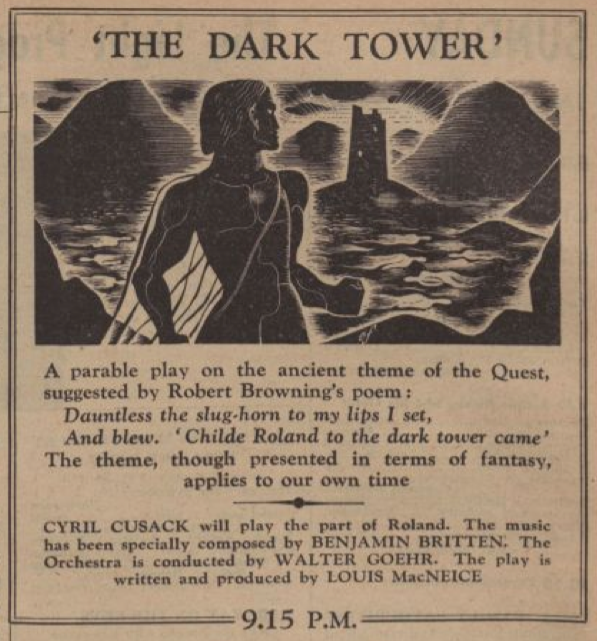 |
| (1946) |
 |
| Tolkien's Barad-dûr |
The painting by J.R.R. Tolkien shows a door on the eastern side of the fortress with Mount Doom to the westward. It was published in The J.R.R. Tolkien Calendar 1973 and 1974, and again in The Lord of the Rings 1977 Calendar in a slightly enlarged and truncated reproduction together with the sketch of Orodruin as an inset.
Then at last his gaze was held: wall upon wall, battlement upon battlement, black, immeasurably strong, mountain of iron, gate of steel, tower of adamant, he saw it: Barad-dûr, Fortress of Sauron. All hope left him.
 |
| C S Lewis's version |
 |
| (1969) |
 |
| Dungeons & Dragons module 'The Dark Tower' (1980) |
 |
| 'Dark Tower' the game (1981) |
The ad with Orson Welles is
here. There's a man showing how to play the actual game
here.
 |
| (1981) |
 |
| The Fortress of Ultimate Darkness from Time Bandits (1981) |
 |
The Dark Fortress from Krull (1983) |
 |
| (1987) |
 |
| The Almoayyed Tower, Bahrain (2003) |
 |
| Finally, this (2013) looks weird. It's based on Browning, but it's a sort of 'Choose Your Own Adventure' computer game. |
The most important point about the Dark Tower of course is that fundamentally it is still a creature of nightmare...

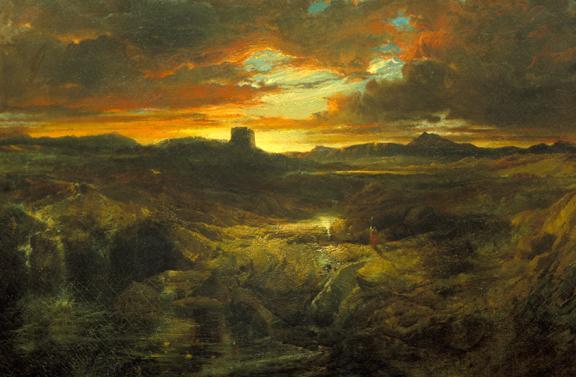
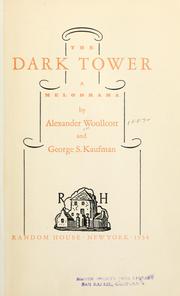


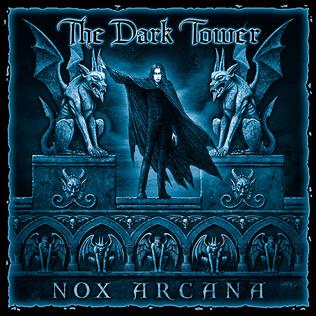

No comments:
Post a Comment