Saturday, 20 November 2010

The Fall and Rise of Ancient Epic Films


An interesting article on Shadowlocked traces the revival of the ancient historical epic in modern cinema to the 1990s film Dances with Wolves. There's a certain sense to this. The last proper ancient historical epic was of course, appropriately enough, The Fall of the Roman Empire in 1964, and in between then and 2000's Gladiator there was genuinely nothing set in the ancient world on the same scale apart from spoofs, scriptural films, scriptural spoofs, and of course fantasies. In the meantime, it took the blockbuster to revive Hollywood itself in the late '70s and '80s, and then the modern historical epic only really broke through again with Kevin Costner (who followed up his Indians with Robin Hood - and indeed JFK - which isn't exactly historical, though it's certainly epic). After Gladiator, however,
Troy followed, exceeding Gladiator’s own commercial success, and although King Arthur and Alexander failed to shine, 300 affirmed the box-office potential of films set in antiquity. This appears to have culminated in 2010’s release of Clash of the Titans, Centurion, The Eagle of the Ninth, and even Percy Jackson and the Lightning Thief, as well as the TV series Spartacus: Blood and Sand, following in the footsteps of HBO’s Rome.

On the surface then, the ancient historical film looks set to continue. Or does it?

Centurion received a disappointingly small cinematic release, and it will be interesting to see how the similar Eagle of the Ninth will be received. However, Clash of the Titans was a commercial hit (although probably not on the levels the studios were hoping for), despite incredibly poor reviews, and the release of Spartacus: Blood and Sand may well be a telling sign. With its heavily 300-influenced visuals, along with Clash of the Titans’ mythological story, it may be that the serious historical epic, like Gladiator, has now had its brief revival. Unless there is a highly successful, mature historical epic over the next couple of years – Robin Hood appears to have disappointed – then the future of the ancient historical film seems to rest in the blockbuster, fantasy-aesthetic of movies such as Clash of the Titans and 300.
Of course the ancient epic genre today is nowhere near home and dry yet, and given that even Ridley Scott and Russell Crowe, back together again, have been unable to save the new Robin Hood (the first since Costner's) it may be touch and go with it for a while.

The real problem is still that although the ancient world is still a decent setting for an epic, its appeal for film-makers surely is that it lies outside of the educational boundaries of the average Joe. If anyone made a WWII drama with a similar plot to Rome he would be ridiculed (Tarantino's recent rubbish notwithstanding).

Monday, 25 October 2010

The Wonderful Boys of Eton College


There's a wonderful post here by the former teacher Katherine Birbalsingh, who was recently disciplined for "dissing" the Socialists' education system.
The Eton upper sixth boys smile as they stand around me, wearing suits, confident, bright and interested, as I ask them various questions. I can’t quite believe that here I am in the place they call “Eton”, the mythical, magical land of learning which up until now, I have only ever been able to imagine. I feel a sense of privilege just for having been allowed to visit.

I am told that some two thirds of their year group are applying to Oxbridge and that nearly a third of their year group will gain a place. That’s a far cry from the two or three I have been accustomed to seeing make it to the spires of scholarly tradition. My eyes open wide with true amazement.

“When one of your friends doesn’t get in, why do you think that is?”

The boys shrug. “It’s because he messed up at the interview or the tests.”

I lean my head to the side. “Yes, but hasn’t there ever been a really really bright boy, one who you’ve always thought was so clever, who hasn’t got in?”

They agree that sometimes that happens, that there was one boy from a couple of years ago, who was superb and yet somehow, he didn’t get in.

“Why do you think that was?” I probe.

They shrug again. “He must have messed up at interview.”

I shake my head, rejecting their polite conversation. “No, no, don’t you think that maybe there is a bias against you boys? Being from Eton and all?”

They shake their heads vigorously. “No, no… it will have been because he messed up… maybe on the exam…”

I keep going. I’m not satisfied with all this business of taking responsibility for oneself. I mean, they’re kids after all, and kids make excuses for themselves. At least most of the kids I know, do.

“Doesn’t it annoy you that some state school kids might gain places because of their potential, rather than their achievements? That some of you might have more A grades, more accolades, more to show for yourselves and yet they get a place instead of you?”

One of the boys draws back from me as if I’ve said something dreadful. He frowns. “But we’ve had advantages that they haven’t had. They haven’t had the privilege of our education.”

I am literally stunned into silence.

Later, I am with one of the boys’ teachers and I cannot stop talking about how wonderful a school it is. He is flattered, but not convinced.

He sighs. “It’s all very well coming here, wandering around the old buildings and presuming that it is excellent. But all you’ve seen is old buildings.”

I am offended that he should think so little of my powers of analysis. “Your buildings? Sure, your buildings are lovely, but that’s not what makes me think as I do. It’s your boys to whom I’ve been speaking most of the evening who have impressed me.”

He smiles knowingly, and I explain how dumbfounded I am by the boys’ sense of responsibility. Even though he nods reassuringly, I’m not so sure he truly understands my genuine sense of awe. He hasn’t had my experiences, you see. He doesn’t know how I simply expect the boys to respond to failure with “It’s cos I is from Eton”. He doesn’t instinctively expect the normal excuse-making which is rampant in the world in which I live. He likely doesn’t realise how the fact that his boys do just the opposite from what I expect says everything about the school, and so perfectly demonstrates that schooling isn’t just about teaching children to say “It is because one attends Eton”. Indeed, it’s about so much more.

Frankly, I don't think she's wrong.

Tuesday, 21 September 2010

Lord of the Flies - in Space!


Hmmm! This is interesting. I just read this, about all the nudity in Ender's Game. Yes, it's one of the reasons Ender will probably end up being my one favourite book not to be ruined by Hollywood (or, in the case of Gormenghast, the BBC) - even if the usual suspects are pumping up the rumour-mill again. But it doesn't necessarily mean Orson Scott Card was a paedophile either.

The point about Card is that he was working with science-fiction clichés about children saving the world from aliens. It's worth bearing in mind that this sort of thing was well established even in the 1970s, decades before Harry Potter had even been heard of. There was John Wyndham with Chocky's kids, there were G-Force (although not yet in English, admittedly), there were The Tomorrow People, and The X-Men, and so on and so forth. But where Card rises above the rest of the dross is in his ability to transcend the old hackneyed memes of his genre. So instead of the usual clean-cut, all American kids (or nice, middle-class English girls and boys), who have super powers and secret identities, Card gives us a realistic Arthur C Clarke-style space world future, with a futuristic "battle school" that is part Hitler Youth and part Lord of the Flies.

Well, I posted my point about Lord of the Flies on the Super Punch comics blog post about the nudity. (Was Golding himself a paedophile? Did he know T H White? I wonder.) But then I noticed that the reason I'd visited this blog in the first place was because I'd been looking for a new picture of Ender that I hadn't seen before. It's a cutting from a bigger picture and was used to illustrate the new film news on IGN. The full pic is shown above, and it turns out it's a new cover for Tor Books' new online edition of the novel. It's by the artist Sam Weber.

Well, blow me down if Mr Weber hasn't already done an illustrated edition of Lord of the Flies for the Folio Society. But then it takes all sorts, I suppose. Lord of the Flies itself remains a classic with the same sorts of people who like Ender's Game. (The sorts of people who like this sort of book, indeed - Michael Jackson and, er, others amongst them!)

Monday, 9 August 2010

Slaying Dragons

Time for some more pictures!

I've been listening to Siegfried over the last few days, now complete with the libretto. So here's the original Arthur Rackham classic of Siegfried killing Fafner.


And here, just to compare and contrast, is John Howe's take on Tolkien's version of the story (or rather of Tolkien's story that was inspired by the Finnish verion of the original legend).


There is of course plenty more Arthur Rackahm stuff out there. Here's Siegfried again, for example, more or less where I left him on Saturday evening, dracone mortuo. And here's Brünnhilde.

Saturday, 12 June 2010

Some Wonderful Photographs


From the archive of Walter Frentz, who was Hitler's official cameraman, here!

Friday, 4 June 2010

Bubbles Forever

'Tell me candidly, have you ever heard Sebastian say anything you have remembered for five minutes? You know, when I hear him talk, I am reminded of that in some ways nauseating picture of Bubbles. Conversation should be like juggling; up go the balls and the plates, up and over, in and out, good solid objects that glitter in the footlights and fall with a bang if you miss them. But when dear Sebastian speaks it is like a little sphere of soapsud drifting off the end of an old clay pipe, anywhere, full of rainbow light for a second and then – phut! vanished, with nothing left at all, nothing.' 
[Evelyn Waugh, Brideshead Revisited]
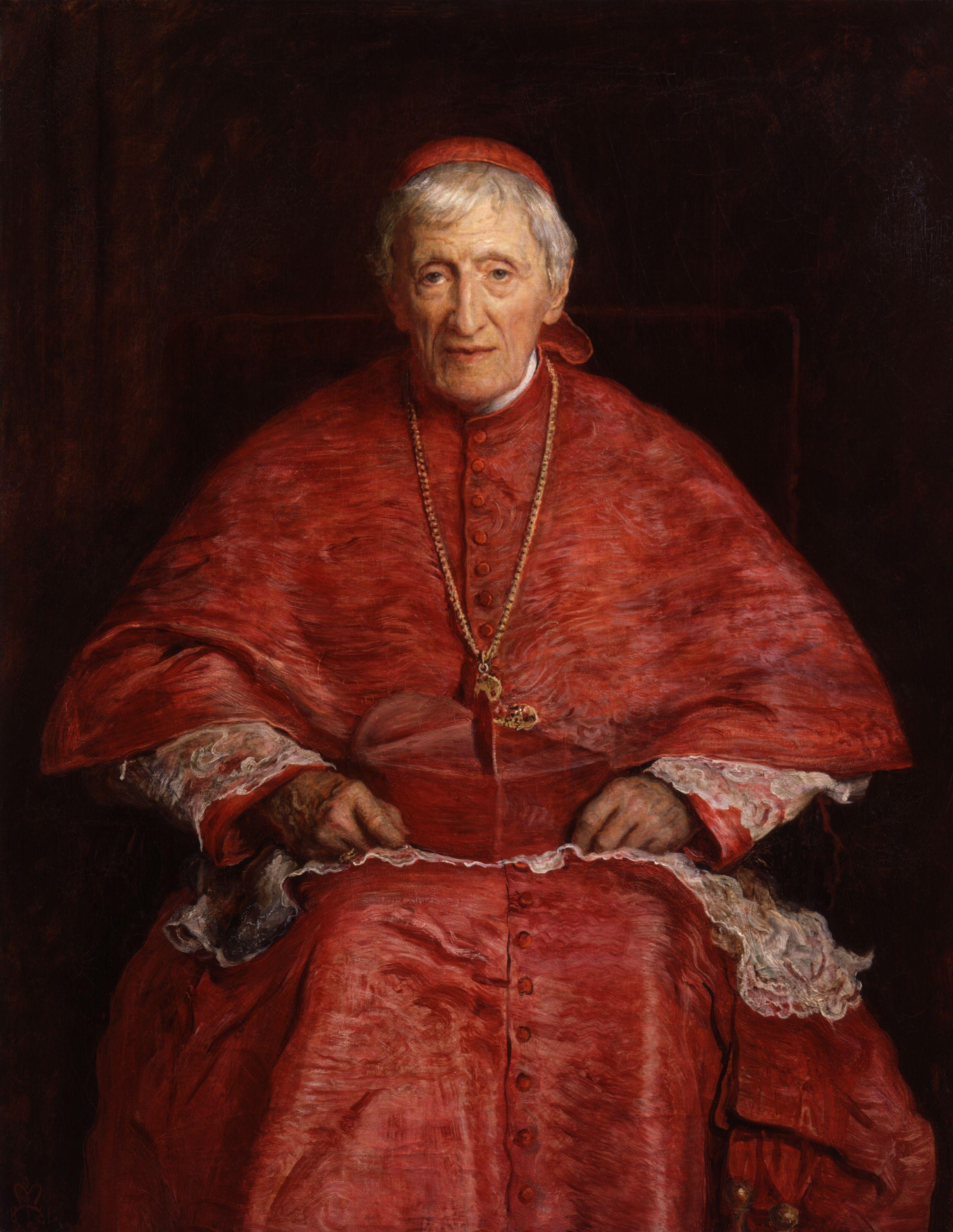
Millais was of course one of Victorian England's most popular artists. He painted such well-known pictures as Ophelia and, of course, the famous portrait of Cardinal Newman. He sold the copyright of Bubbles to the Pears Soap company, which in turn was acquired by the Lever Brothers. The painting is now in the Lady Lever gallery in Port Sunlight. I saw it there the last time we visited my grandmother in Bootle.

The little boy in the painting is actually Millais's grandson, who was then five years old. He went on to enjoy a distinguished career in the Royal Navy, serving in naval intelligence in both world wars, as well as politics and literature. He was always known by his nickname "Bubbles".

Friday, 16 April 2010

The Two Trees


A. History

In general terms, the Tree of Life is good to eat. It makes man immortal. Man was forbidden by God to eat of the Tree of Knowledge, however. This prohibition was a test, which Man failed (according to the Catholic and Jewish understanding).

Original Sin was disobedience.


B. Symbolism

i. Eating of the Tree of Knowledge of Good and Evil was a violation of the Tree of Conscience, and God's prohibition against eating the forbidden fruit symbolises how even in a totally free and perfect world one must still be bound by conscience
There's a sense in which man's eating of the fruit of the Tree of Knowledge was a violation. Man's purpose was to tend the Tree of Knowledge, not denude it, and God exiled Man rather than allow him to violate in some way the Tree of Life. If the Tree of Knowledge was the Tree of Conscience then symbolically Man violated his conscience when he broke God's commandment not to do so: symbolically, man preferred to follow his ego rather than the voice of God within him. Tolkien makes use of the idea of the two trees being threatened or violated in 'The Silmarillion'. So does Neil Gaiman in Sandman.

ii. Knowledge = Gnosis, serpent = gnostic, Protestant, etc.
If the phrase 'of Good and Evil' is a merism then the Tree of Knowledge of Good and Evil was really 'the Tree of Knowledge, Good and Evil'. Actual knowledge, however, is true, justified belief. It is an appealing thought that the Trees of Knowledge and of Life could compositely be cognate with the Great Ash Tree in Norse mythology, which is a source of both life, in the form of the golden apples (which themselves have cognates in classical myth), and wisdom, which comes from the waters that well up underneath it. In Norse myth too, after all, the tree is threatened by a serpent (whereas in the classics the golden apples are guarded by one).

It is a similarly appealing thought that at the base of this idea was the use of hallucinogenic fruits by pagan magicians to gain shamanic wisdom and knowledge - the sort of thing that Yahweh would have roundly condemned. There may, indeed, be a parallel even with the Bodhi tree, which gives "wisdom", in Buddhism. The problem here is that the Tree of Knowledge was good to eat from. Indeed it is unthinkable that God would have allowed a tree that gave false knowledge to grow in Paradise. The Tree and the fruit itself therefore were not bad. But Man's purpose was to work in the Garden and to grow in sanctity through love, not merely through the attainment of knowledge. The forbidden fruit did indeed "open their eyes" then, but, according to Maimonides, what it really did was it altered their moral awareness, from one of truth and falsity to that of good and evil. And as Challoner points out, Man already knew Good and his temptation was to take an interest in wickedness. In the view of the gnostics, of course, and of the liberal Protestants such as Blake who are their intellectual successors, all knowledge is good, and therefore the Serpent itself was good, and Yahweh Himself is evil. Such are the Satanic roots of modern Protestantism.

iii. Tree of Knowledge = Carnal Knowledge, etc.
This is the least likely symbolic meaning, since procreation in the natural manner was not forbidden in Eden, as St Thomas demonstrates quite satisfactorily.
In the state of innocence there would have been generation of offspring for the multiplication of the human race; otherwise man's sin would have been very necessary, for such a great blessing to be its result. We must, therefore, observe that man, by his nature, is established, as it were, midway between corruptible and incorruptible creatures, his soul being naturally incorruptible, while his body is naturally corruptible. We must also observe that nature's purpose appears to be different as regards corruptible and incorruptible things. For that seems to be the direct purpose of nature, which is invariable and perpetual; while what is only for a time is seemingly not the chief purpose of nature, but as it were, subordinate to something else; otherwise, when it ceased to exist, nature's purpose would become void.

Therefore, since in things corruptible none is everlasting and permanent except the species, it follows that the chief purpose of nature is the good of the species; for the preservation of which natural generation is ordained. On the other hand, incorruptible substances survive, not only in the species, but also in the individual; wherefore even the individuals are included in the chief purpose of nature.

Hence it belongs to man to beget offspring, on the part of the naturally corruptible body. But on the part of the soul, which is incorruptible, it is fitting that the multitude of individuals should be the direct purpose of nature, or rather of the Author of nature, Who alone is the Creator of the human soul. Wherefore, to provide for the multiplication of the human race, He established the begetting of offspring even in the state of innocence.
 
[Summa Theologica, I.98.1]
Admittedly though it does set the theme for the rest of the Book of Genesis, which is primarily "about" generation. For the liberal Protestants, along with the idea of all knowledge being good, no matter how it is gained, just as appealing is the idea of sexuality being always good, no matter how it is exercised.

Wednesday, 14 April 2010

Cuban Commie Boy-Candy


Remember this?
The grandmothers of Elian Gonzalez assessed his growth and his well-being by taking his pants down and to look at his penis.

When the relatives in Miami heard about this, they accused the grandmas of being child molesters, but the response though was that this a cultural custom in Cuba.

It appears that assessing penis sizes as a biological index of health is a common practice in the Caribbean and Latin American.

Could this fact be construed as an example of the cultural standard of normality?
 

Well, fair enough, maybe! It now turns out, in fact, that Cuba's hottest bit of boy-candy... is still Cuba's hottest bit of boy-candy. And now it's not just the grannies who are interested in Elian's private parts. (Not that over the years I've come to expect anything more from these people! )

Tuesday, 13 April 2010

'Trees'


I THINK that I shall never see
A poem lovely as a tree.

A tree whose hungry mouth is prest
Against the sweet earth's flowing breast;

A tree that looks at God all day,
And lifts her leafy arms to pray;

A tree that may in summer wear
A nest of robins in her hair;

Upon whose bosom snow has lain;
Who intimately lives with rain.

Poems are made by fools like me,
But only God can make a tree.

[Joyce Kilmer]

Thursday, 4 March 2010

...and Superboy joins the Scouts!


When I was a kid I didn't really see the point of Superboy. After all, he wore the same costume as Superman and in fact was almost indistinguishable from him. I suppose he was easier to draw, because he had fewer muscles. But his adventures just weren't as interesting.

Nowadays of course I really don't see the point of the modern Superboy character (who isn't actually Superboy anyway). He's just a slightly nastier, smuttier version of Superman, and his costume (it's not called a "uniform" anymore) is totally stupid.

Well, here's the original, proper version of Superboy, doing proper, traditional, wholesome things that proper traditional teenage super-heroes are supposed to do. And which probably no boys do anymore at all!

Superman goes to church...


More Superman stuff, just to raise my flagging spirits! (This and this really hurt this morning.) Here Superman visits a Catholic church. (It's not so improbable, if you consider that his wife is a Catholic.)

And the Catholic Church could certainly use a real Superman (e.g. the services of a man who is also God, perhaps!) right now. The big problem with "conservative" Catholics is that they think the world is going to the dogs (which it is) but they also imagine that the Catholic Church somehow has all the answers that will solve everything. (Yes, I'm talking about people like this.) "Traditionalists" are at least a bit more realistic, in that they concede that the Catholic Church itself is going to the dogs as well, and in fact that it's the decline of the Catholic Church (in real terms) that is one of the biggest causes of the secular calamity the world is facing.

Just to take one example, the President of the Vatican Bank has pointed out that the real cause of the current economic collapse in the west is the collapse of the birthrate. He is, of course, quite right. But will the Catholic Church restore its traditional teaching about the Sixth Commandment? Don't bet on it!

Thursday, 25 February 2010

Up, up and away?


The good news, apparently, is that the next Superman film may well be an improvement on the gay garbage we had to be put up with last time.

The bad news, unfortunately, is that if it doesn't happen soon then it may well not happen at all, when the estates of Siegel and Schuster get their baby back again and the Man of Steel in America at any rate flies no more (with DC, at any rate).

Friday, 22 January 2010

"The Poofs will love us!"


It was of course the saintly and best beloved Jennifer Paterson who came up with the line, referring to herself and Clarissa Dickson Wright as they embarked on their short but remarkably successful career as The Two Fat Ladies. And she was absolutely right, of course.

But her prediction could just as well go for former Catholic choirboys Jedward.

Wednesday, 6 January 2010

And still not Merlin!

(Or 'You know you’re a serious Doctor Who geek when…')

The Novus Ordo Whovians out there will of course have immediately cross-referenced the new Matt Smith Doctor's opening comment about still not being ginger with the Tennant Doctor’s similar line from The Christmas Invasion. In fact Auntie hersef has been forced to do just that in order to rebuff charges of being "anti-ginger". (And after Tesco got into trouble just before Christmas for the same thing, as well! To think the Beeb would have dared!) We sad cases of arrested development hardliner traditionalists, on the other hand, will have detected quite a different in-joke.

For were we not promised a “Merlin” incarnation of the Doctor with a ‘head of unruly red hair’ (not to mention an embroidered Afghan coat) back in 1991, when Marc Platt did the “novelisation” of Battlefield? This, if one casts one's mind back, was long ago in the days when it was by no means certain that Doctor Who would actually have a future, at least on the small screen, and so inventing future incarnations of the Doctor was quite the sport. Perhaps even more infamously, Ian Briggs (writing at about the same time) produced a future ‘older gentleman’ Doctor complete with a waistcoat and pocket watch in his novelisation of (his own story) The Curse of Fenric. (Not quite the David Tennant Doctor, I suppose, but quite possibly the fairly anaemic Paul McGann incarnation!) And indeed Nick Briggs (no relation - so far as I know!), who now does all the Dalek voices on the new series, not only cast himself as a future Doctor in various homemade Doctor Who spinoff videos but even got his homemade incarnation featured in Marvel's Doctor Who comic strip a couple of times.

I just dug out an old interview with Platt from eighteen years ago.
The first question I [i.e. Gary Russell] ask him has nothing to do with The New Adventures but how he ended up writing the novelisation of [Ben] Aaronovitch’s Battlefield scripts?

“Basically, Ben asked me to do it. He was getting very tied up with a lot of other work back then and he just didn’t have time to do the book. I was incredibly flattered to be asked, I think it’s a great story. Probably over ambitious for television but it’s a terrific script needing a feature film budget! The adventure was full of potential for wonderful pastiches of styles, Tolkien and cyberpunk, things like that, which I had a whale of a time doing! For instance when I was suggesting the future version of the Doctor/Merlin I just wanted an image of the Doctor we hadn’t seen before. Most Doctors have outrageous hairdos and I thought we hadn’t had a red head so there we are.”
[Doctor Who Magazine, Issue 184]
And so there we have it! A cheery farewell wink from Uncle Russ to his fellow fans? Probably! (And not to laugh, either! Paul Cornell for one has set a lot of store by all that Merlin stuff over the years - as he concedes here, along with a confession that Excalibur is one of his favourite films - even though 'He's Merlin.' was one of the lines from his most popular New Adventure novel - now on line here - that didn't quite make it into Thomas Sangster's haunting little speech about the Doctor in its TV-version.) Indeed, now that he's back on telly (and, with a young and even more teen friendly actor in the lead, unlikely to be seriously off it again any time soon), can we saddos finally rest assured that the Doctor does have a future? Perhaps!

After all, in the end, in The End of Time 'Part Two' there was a good deal less to cringe at than one had feared. The Last Great Time War was finally expanded into something more than just a straight stand-off between the Time Lords and the Daleks. In fact it turns out that it was much more like all those Time Wars and Eternal Wars from The New Adventures (including, it just so happens, in Russell T Davies's own New Adventure). The Time Lords, it turns, weren't all killed: they were just trapped in some temporal paradox or something and could be let out again at almost any time. Timothy Dalton, it turns out, was Rassilon. (On reflection, presumably all that "narrator" stuff was just him carrying on with his Book of the Old Time, pseudo-Caesar-esque self-aggrandisement agenda - though I still half expected him to end up regenerating into Pierce Brosnan.) And, if the tabloids were to be believed, the Claire Bloom character was the Doctor's mum.

So if nothing else I suppose we can think what we've been spared! Looking on the more positive bright side though, if Steven Moffatt now decides he ever wants to pull a Time Lord or twenty out of the woodwork at any point in the new new series then, now the Time Lords have been officially "brought back", he will be free to do so. Whilst he's at it, the TARDIS control room could do with a "new" look (i.e. the old one from the original series would be pretty cute). And, as I've already noted, the TARDIS exterior and the Eleventh Doctor's costume are both going to be pretty trad (by modern standards).

So he's still not Merlin - yet, at any rate. But given that Doctor Who's already produced one Merlin in the shape of Colin Morgan (from 'Midnight'), perhaps that doesn't matter.

Saturday, 2 January 2010

Fear of Choirboys?

There's no telling of course whether it was the Express being paedophobic or just incompetent that they couldn't quite bring themselves to post a picture of Geraint Llyr Owen without cutting his head off. (Presumably they want to celebrate British talent, in their narrow-minded little way, but showing a 13-year-old's face is just too smutty for their website!) The Daily Telegraph at least has a proper picture. He'll be singing at the Lincoln Centre in New York later this month. His YouTube vid is here.

Another "Real" Tintin


Congratulations ought to go to The Times, I suppose, for coming up with the goods today about Belgian Scout Henri Dendoncker (pictured in costume, aged 14). Their report finishes off with
Tintin was based on Hergé’s younger brother, Paul. When the brothers fell out, Hergé used Paul’s older self as the basis for the baddie Colonel Sponz[.]
Never come across this one before! I must say I prefer to think of Léon Degrelle in the role. On the other hand, I think I'd prefer almost anyone to Jamie Bell, seen here in the upcoming Eagle of the Ninth - which presumably will be to be at best another Last Legion and at worst, well, another Last Legion!